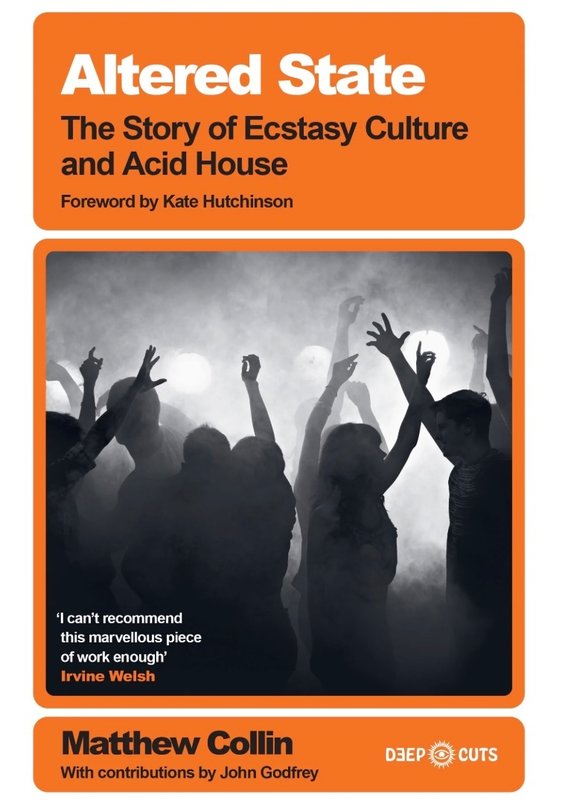
This piece was written by Matthew Collin who has just re-released his essential book ‘Altered State: The Story of Ecstasy Culture and Acid House’ which is published by White Rabbit Books and can be ordered online here. It was originally published in 1987 and as Irvine Welsh said at the time, 'At last somebody has written the real history of the last ten years, and written it with such wit, verve, empathy and profound intelligence. I can't recommend this marvellous piece of work enough'. We asked Matthew for twelve records that summed up that time and here's what he wrote. It's superb piece. Over to Matthew...
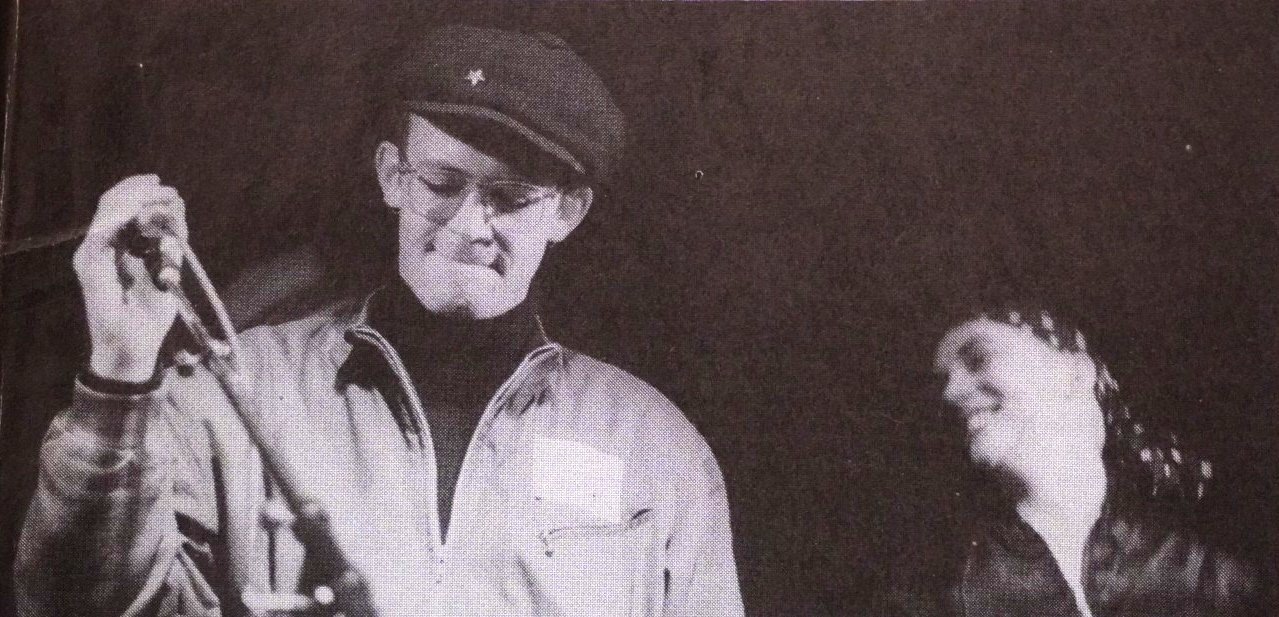
In February 1988, before Ecstasy hit Manchester with full force, I went down to the Haçienda to see the Northern House Revue, an event featuring some of the UK’s early house hopefuls like Mike Pickering’s T-Coy and Graeme Park’s Groove performing their enthusiastic interpretations of the American sound.
As soon as house music reached Britain, young innovators all over the country – already fired up by hip-hop’s irreverent use of sampling – had started to try to emulate it: Bang the Party in London, T-Cut-F in Nottingham, 808 State in Manchester, Eddie Richards in Milton Keynes, and many more. Cheaper technology had thrown music-making wide open, sparking off a wave of creative energy. By the end of 1987, the NME was already heralding what it called “the British house boom” and claiming that this low-budget, DIY music-making culture represented “the spirit of punk reborn on Britain’s dancefloors”.
Like early punk, the music could be a bit random. “Those early British house tracks had a kind of naïve charm,” Graeme Park recalled. While I was working on the new edition of my rave-era book Altered State: The Story of Ecstasy Culture and Acid House, I went back and listened to some of them. Some were naïvely charming, some were crappy copies of Chicago jacktracks, and some were just downright strange. The people inspired to make early UK house came from all kinds of musical backgrounds – soul, funk, hip-hop, alternative rock, industrial music – and they brought some of these influences with them. No one knew what the rules were, because there weren’t really any.
Pre-Ecstasy, house music was a genuinely underground sound, but paradoxically it was also pop: as early as January 1987, Steve ‘Silk’ Hurley’s ‘Jack Your Body’ reached number one in the national charts. By January 1988, the Brits were up there too - ‘House Arrest’ by Sheffield crew Krush and ‘Theme from S’Express’ by London’s S’Express became top ten hits.
Altered State tells the story of how the combination of MDMA and house music sparked a nationwide cultural revolution. This selection of UK tracks that were made before 1988 comes ahead of all that, when most people in Britain hadn’t heard of E yet and the acid house Summer of Love was a long way off. But undoubtedly, these records helped prepare the ground for the ecstatic events to come.
1. Bang the Party ‘I Feel Good All Over’ (Kool Kat/Warriors Dance)
“Ladies and gentlemen, we want to dedicate this song to London – young, turned-on London, the sound of the inner city…” With these words, Lawrence ‘Kid’ Batchelor, one of the crucial instigators of the house scene in the capital, opens this slinky strut of a tune from 1987, showing why young Black British trio Bang the Party were one of the most important UK crews of their time. Lawrence once told me that this were trying to create “a British version of Afrofuturism”, drawing on the Black musical cultures they grew up with and the influences swirling around them in London’s streets and clubs: Caribbean, African, European. ‘Jacques’ Theme’, the ethereal flipside to ‘I Feel Good All Over’, still sounds excellent too.
2. T-Coy ‘Carino’ (Deconstruction)
T-Coy channelled the loose-limbed, eclectic sound of the Haçienda’s Nude Night before the MDMA frenzy transformed it into house-music-all-night-long. The trio comprised Haç DJ Mike Pickering, Latin percussion enthusiast Simon Topping and keyboard wizard Richie Close, and ‘Carino’, released in 1987, was “a sort of blend of Tito Puente and Adonis”, Topping suggested. Pickering and Topping had both been members of avant-dance bands on Factory Records (Quando Quango and A Certain Ratio respectively), but embraced the faceless track-making ethic of house. “It’s fantastic - you live and die by the track you’ve made, you’re anonymous, you’re only as good as your last record,” Pickering
3. Myster E ‘Page 67’ (Baad!)
This dreamy Marshall Jeffersoneque synth-sketch from 1987 with lyrics about the spiritual power of the conscious mind was made by Milton Keynes-based innovator Eddie Richards and a talented young chap called Richard West, later to gain fame as Mr C. Richards initially became renowned for his electronic selections at the Camden Palace club in London in the mid-eighties and was involved in creating one of the first UK DJ mix albums to use rudimentary samples and snippets of TV broadcasts, Heavy Duty Breaks, in 1985. He would go on to be resident at the legendary RIP club at London’s Clink Street Studios during the Summer of Love, alongside Mr C and Kid Batchelor of Bang the Party, and would also have one of the first UK acid house hits with ‘Acid Man’ in 1988, using the suitably piratical pseudonym Jolly Roger.
4. T-Cut-F ‘House Reaction’ (Kool Kat)
We all know about house music and the North, but house music and the Midlands is a lesser-told story. This 1987 tune was created by a Nottingham outfit, mixed at a studio in Derby and released by a Birmingham-based label. It may be obscure but it involves some well-known names in dance music: Detroit’s Derrick May was the remixer and Charles Webster did the edits. The track was released on Kool Kat, which was run by Northern Soul veteran Neil Rushton, who put out a lot of the early UK house as well as being the first British label to champion Detroit techno, whose prime movers he brought over to do remixes and their own studio work in the Midlands. ‘House Reaction’ appears on Kool Kat’s House Masters - UK vs. USA Showdown compilation, which includes a couple of other early Brit-housers from the Midlands, Liaz and Colm III.
5. Hotline ‘Rock This House’ (Rhythm King)
A smooth-running jazz-funk-meets-house tune out of Huddersfield from 1986, with a vibe that strongly hints at ‘Twilight’ by Maze, indicating possible soul all-dayer scene origins. Electronic soul and electro-funk were still big influences at that point; ‘Submit to the Beat’, the first release by Graeme Park’s outfit Groove in 1987, had some similar vibrations. In an interview at the time, Hotline said their track was made for the local scene. “House is really big in the north at the moment, it’s where it’s happening… It’s a lot bigger than it is down in the South,” they insisted – highlighting that the debate about which part of the UK adopted house music first was already raging four decades ago.
6. M/A/R/R/S ‘Pump Up the Volume’ (4AD)
Released in August 1987, a landmark record for UK dance music that spotlights the sonic obsessions of the time, from the scratched-in Public Enemy steal to the James Brown horns and the Rakim sample that gives the track its name. It showed how an assemblage of samples could create thrilling pop music and how DJs would become the scene’s essential animateurs – as well as sparking a debate on the legal and moral ethics of nicking bits of other people’s records to make your own. Decades later, Dave Dorrell of M/A/R/R/S was unapologetic. “I’m totally in favour of an open-door approach to creativity,” he told me in an interview for my book about UK electronic music history, Dream Machines. “It’s like Duchamp painting a moustache on the Mona Lisa and making a gag out of it, and also great art as far as I’m concerned, because sometimes you have to dare to be an iconoclast and break the frame. Shock, horror! Great. Fucking great.”
7. Honest Doc & Mr Driver ‘The Spell’ (Jaxx)
One of those records that used a Speak & Spell toy to provide a ‘futuristic’ Kraftwerk-on-a-budget lead vocal. Also one of those records made by faceless unknowns who may or may not have recorded other house tracks in later years. Released in 1987, it was made at a time when people were trying to copy the Chicago and Detroit sounds they’d heard while out clubbing, but couldn’t quite recreate them exactly and got it wrong in interesting ways. Discogs offers no clues as to who this duo were, if indeed they were a duo, but the record has a lovely synthetic swing that would still sound great on a late-night internet radio broadcast.
8. The Beatmasters featuring the Cookie Crew ‘Rok Da House’ (Rhythm King)
A lot of early UK house was very poppy, like this hip-hop/house hybrid from 1987, which rose as high as number five in the charts. The Beatmasters were London clubbers who had started out making advertising jingles and idents for the frenetic new ‘youth TV’ programmes produced by Janet Street-Porter around, adapting club sounds for mainstream television. ‘Rok Da House’ attempted a similar feat by combining London rap trio the Cookie Crew with a fizzy Chicago beat. “We wanted to bring this fantastic music from the underground to the overground and let people hear it,” declared Beatmaster Manda Glanfield.
9. 808 State ‘Prebuild’ (Rephlex)/Aphex Twin ‘Selected Ambient Works 85-92’ (Warp)
Two post-factum compilations containing tracks that offer some insight into low-budget acid house production by then-marginal British artists before E took it all to another level. The tracks on ‘Prebuild’ that were cut by 808 State with A Guy Called Gerald in Gerald’s attic are completely bonkers, showing how wild UK acid could get. 808 State’s Graham Massey said that the style caught the imagination of people like him who had grown up on alternative music because “it was alien, it just sounded so twisted and so out-there”. It seems possible that Aphex Twin embraced it for similar reasons. The more low-tech, home-brewed tracks on ‘Selected Ambient Works 85-92’ show how, in the absence of any direct experience of the Chicago scene and the culture from which it originated, Brits conducted almost blind experiments with the genre and caused it to mutate.
10. Mel & Kim ‘Showing Out (Get Fresh At the Weekend)’ (Supreme)
OK, so maybe this 1986 Stock Aitken Waterman production might be a controversial choice as an early UK house track. But although it’s a pure pop record, it owes much to Steve ‘Silk’ Hurley’s ‘Jack Your Body’ and it shows how quickly house influences pervaded mainstream music in the UK. Stock Aitken Waterman’s young studio engineers were going out partying on the London club scene and bringing back ideas that were incorporated into the Hit Factory’s productions. Before, SAW had mainly based their hits on derivatives of Hi-NRG, but now house became their primary rhythmic source material. Anyway, UK house or not, the sheer vitality of Mel and Kim Appleby infuses this tribute to weekend revelry with a feeling of irrepressible joy.
11. 2 Men A Drum Machine & A Trumpet ‘Tired Of Getting Pushed Around’ (London)
Various British pop stars had a go at making house before 1988, including members of the Fine Young Cannibals and The Specials, veterans of a previous multicultural dance craze, 2-Tone. ‘Tired Of Getting Pushed Around’, released in 1987, was produced by FYC chaps Andy Cox and David Steele, complete with ‘Rockit’ stabs, a house bassline, some piano frills and Humphrey Bogart samples. In terms of pop stars making house, The Specials’ Neville Staple was involved in FX’s ‘Faith Hope and Charity’ the same year, and many more would get at it after acid house broke in 1988, including Boy George, ABC and Paul Rutherford of Frankie Goes to Hollywood.
12. Midnight Sunrise with Nellie ‘Mixmaster’ Rush featuring Jackie Rawe ‘On the House’ (Crossover)
It’s been claimed that this gaudy number was the first ever UK house record, put together in the summer of 1986 by Hi-NRG DJ Ian Levine, future Hollywood soundtrack maven Hans ‘Lion King’ Zimmer and future Nomad mainman Damon Rochefort, who went on to become a Coronation Street scriptwriter. The song is a pastiche of Farley ‘Jackmaster’ Funk’s hit ‘Love Can’t Turn Around’; Farley even did a remix, but it’s really no more than a historical curiosity.
Matthew Collin's ‘Altered State: The Story of Ecstasy Culture and Acid House’ is published by White Rabbit Books and can be ordered online here.